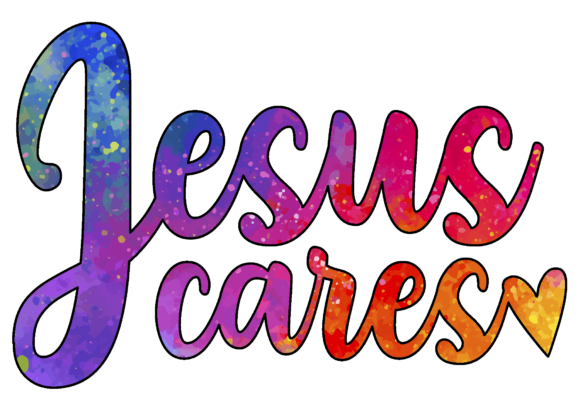
Jesus Cares: An Embroidery Designer's Honest Review
When I first opened the Jesus Cares embroidery file, I was looking for something that could carry a message without shouting. As someone who has stitched hundreds of designs for clients, small shop owners, and personal gifts, I have learned that faith-based designs live or die by their balance. Go too ornate and you lose the warmth. Go too simple and you lose the meaning. Jesus Cares lands in a sweet spot that deserves a closer look before you commit it to fabric.
First Look: Mood and Visual Personality
Jesus Cares sits squarely in the Illustrations category, and that makes sense the moment you study the layout. It does not rely on dense lettering or complicated scripture blocks. Instead, the design uses a thoughtful arrangement of symbolic imagery and flowing text that feels approachable rather than heavy. The overall mood is gentle, reassuring, and personal. It is the kind of design that invites conversation rather than just decoration.
The shape reads well at a glance. There is enough detail to keep the eye engaged, but nothing feels crowded. The visual weight is distributed in a way that suggests the designer understood how thread lays down on fabric. That matters more than most buyers realize. A design that looks good on screen can turn into a tangled mess if the stitch paths are not planned for real needle movement. Jesus Cares appears to have been built with that reality in mind.
For crafters and small business owners, this kind of approachable faith design is gold. It works across a wide range of customers without alienating anyone. Whether you are stitching for a church fundraiser, a personalized gift, or a boutique product, the tone here is inclusive without being vague.
A Real Scenario: The Custom Tote Bag That Started a Conversation
I decided to test Jesus Cares on a medium-weight canvas tote bag. Tote bags are one of the most popular items in the handmade space right now, especially for small shops and Etsy sellers. They are low cost to produce, easy to ship, and they carry designs in a way that feels casual but intentional.
I hooped the bag with a firm cutaway stabilizer and ran a test stitch on a scrap piece first. The thread colors I chose were a warm cream and a soft navy, which gave the design a quiet, grounded look. As the machine worked through the satin stitches and fill stitches, I watched the lettering come out crisp. The curves in the text held their shape without any pull or distortion. The fill stitches covered evenly, and the running stitch accents added just enough texture without creating bulk.
When I handed the finished tote to a friend who runs a small shop, she immediately put it to use as a display piece. Within two hours, a customer asked if she could buy it off the floor. That is the kind of reaction that tells me Jesus Cares has real commercial potential. It is not just a design that stitches well. It is a design that people want to be seen with.
Performance Across Different Products
After the tote bag test, I wanted to push Jesus Cares further. I stitched it on a few different blanks to see how it adapted.
- Sweatshirts and hoodies: The design sat beautifully on a mid-weight fleece. The stitch density was not so high that it made the fabric pucker, and the motifs held their shape even after a wash cycle. This is a strong candidate for custom apparel in a faith-based clothing line.
- Baby onesies and blankets: I scaled the design down slightly for a baby gift. The smaller version kept its clarity. The lettering was still readable, and the imagery did not lose its detail. For anyone making personalized newborn gifts or christening items, this is a solid choice.
- Pillow covers and home decor: On a linen pillow cover, Jesus Cares took on a soft, heirloom quality. The fill stitches felt plush without being stiff. It blended well with a neutral fabric palette.
- Patches: I also stitched it as a standalone patch with a satin stitch border. It trimmed cleanly and held its edge. Patch makers will appreciate how well the design translates to a smaller, standalone format.
- Caps and curved surfaces: This is where I had to be more careful. The design does have some width that requires a stable hoop and a good cap frame. On a structured cap, it worked well. On a relaxed fit cap, I needed extra stabilizer to keep the lettering from distorting.
Where to Use Jesus Cares Carefully
No design is perfect for every surface, and Jesus Cares has a few boundaries worth noting.
- Very small hoop sizes: If you are working with a 4x4 hoop, you may need to check the scaled-down version carefully. The lettering and details shrink gracefully but test on scrap fabric first to confirm readability.
- Thin or delicate fabrics: Lightweight silks or very fine cottons may need additional stabilizer or a topper to prevent the fill stitches from sinking. I recommend a tear-away stabilizer with a water-soluble topper for sheer fabrics.
- Dark fabrics: The design relies on contrast for its impact. If you stitch it on black or very dark fabric, choose thread colors that pop clearly. A white or metallic thread can work beautifully, but test the contrast before committing.
- Stretchy knits: On ribbed or highly stretchy fabrics, I suggest a cutaway stabilizer and a slight reduction in stitch density if your software allows it. The satin stitches need a stable base to avoid distortion.
- Layered garments: If you are adding the design to a jacket or garment with thick seams, make sure the hoop sits flat. Any tilt will affect the alignment of the lettering.
Visual Appeal and Customer Trust
In the world of handmade products, trust is everything. Customers who buy faith-based embroidery are often looking for something that feels sincere, not mass-produced. Jesus Cares delivers that sincerity through its clean execution and thoughtful composition. It does not look like a clip-art conversion. It looks like a design that was drawn with thread in mind.
For Etsy sellers and craft fair vendors, that translates directly into buyer confidence. When a customer picks up a pillow or a sweatshirt and sees clear, even stitching with no gaps or puckers, they trust the quality of the whole product. That trust leads to sales, repeat orders, and word-of-mouth referrals.
The design also works well in printable mockups for digital product listings. Because the shapes are clear and the contrast is strong, Jesus Cares photographs well on finished products. That is a practical advantage for anyone selling digital embroidery files or finished goods online.
Practical Designer Notes Before You Stitch
Before you load Jesus Cares into your machine, here are a few steps I always recommend for any new design file.
- Test on scrap fabric first. Even if the design looks perfect on screen, thread tension and fabric texture can change everything. Run a small test stitch to confirm the density and alignment.
- Check thread color contrast. Try a black and white mockup of the design to see where the light and dark areas fall. This helps you choose thread colors that will read clearly from a distance.
- Confirm your hoop size. Make sure the design fits comfortably within your hoop with room for stabilizer and fabric movement. Cramming a design into a tight hoop can cause shifting.
- Review stitch density. If your embroidery software allows it, check the density map. Areas with heavy satin stitches may need a slightly looser tension on certain fabrics.
- Use proper stabilizer. For most medium-weight fabrics, a cutaway stabilizer is a safe choice. For lightweight or stretchy fabrics, consider combining a cutaway with a water-soluble topper.
- Inspect small details. Zoom in on the narrowest parts of the lettering and the smallest motifs. If anything looks too thin for your fabric, adjust the scale slightly.
- Confirm licensing before selling. If you plan to use Jesus Cares in commercial embroidery projects or as part of a digital product line, double-check the license terms. Some designs allow unlimited commercial use, while others require attribution or a separate license for digital resale.
Commercial Potential for Small Shops and Creators
I see Jesus Cares as a strong addition to any craft business that serves the faith-based market. It works equally well for one-off personalized gifts and for small production runs of boutique merchandise. The design is versatile enough to appear on a baby blanket, a tote bag, a sweatshirt, or a pillow cover without feeling repetitive.
For digital product sellers, this is the kind of design that performs well in bundles and collections. It pairs naturally with other faith-themed files, and it stands out in search results because of its clear visual identity. Customers browsing for meaningful machine embroidery designs will recognize the care that went into the layout.
The fact that it comes from the Illustrations category also means it carries a hand-drawn feel that many buyers find appealing. It is not stiff or overly geometric. It breathes. And that breathability translates into finished products that feel personal rather than factory-made.
Final Thoughts Before You Stitch
Jesus Cares is not a design you will outgrow after a few projects. It has enough depth to work across multiple product types, and it holds up well under real stitching conditions. The lettering is clear, the imagery is warm, and the overall composition feels balanced without being boring.
For anyone running a small shop, building an Etsy store, or simply making gifts for loved ones, this embroidery file offers a reliable foundation. It has earned a spot in my active design library, and I expect it will earn one in yours too.
Load it up, test it on a medium-weight fabric first, and see how it transforms a simple blank into something that carries meaning. That is what good design does. And Jesus Cares does it well.